The Waikanae Post Office (Former) built in the Kāpiti Coast township of Waikanae in 1907 and opened in February 1908, has historic significance as representative of the nationwide expansion of postal services in New Zealand in the early twentieth century. The building also has architectural significance as a small Post Office typical of the period.
Before 1822 Muaūpoko prospered in the area. They benefited from the abundant marine and inland natural resources available in the area, and the proximity to pounamu sources in Te Wai Pounamu / the South Island. Between 1822 and 1824 Ngāti Toa from Kāwhia, led by Te Rauparaha, moved south leaving behind the turbulent musket wars underway in the Waikato. They soon dominated the Kāpiti area, establishing a fortified base on Kāpiti Island. Between 1825 and 1828 Ngāti Raukawa and Te Ātiawa, also migrated to settle in the Kāpiti region. Following Pākehā settlement, Kāpiti became an important place for early contact between Māori and Pākehā in Aotearoa New Zealand. From 1833 until the mid-1840s whalers set up operations along the coast and on Kāpiti Island, processing the carcases of whales for oil and bone and frequently intermarrying with tangata whenua. As Pākehā settlement burgeoned in the area, the demand for a reliable post office service grew and Waikanae’s first post office building opened for business in 1865.
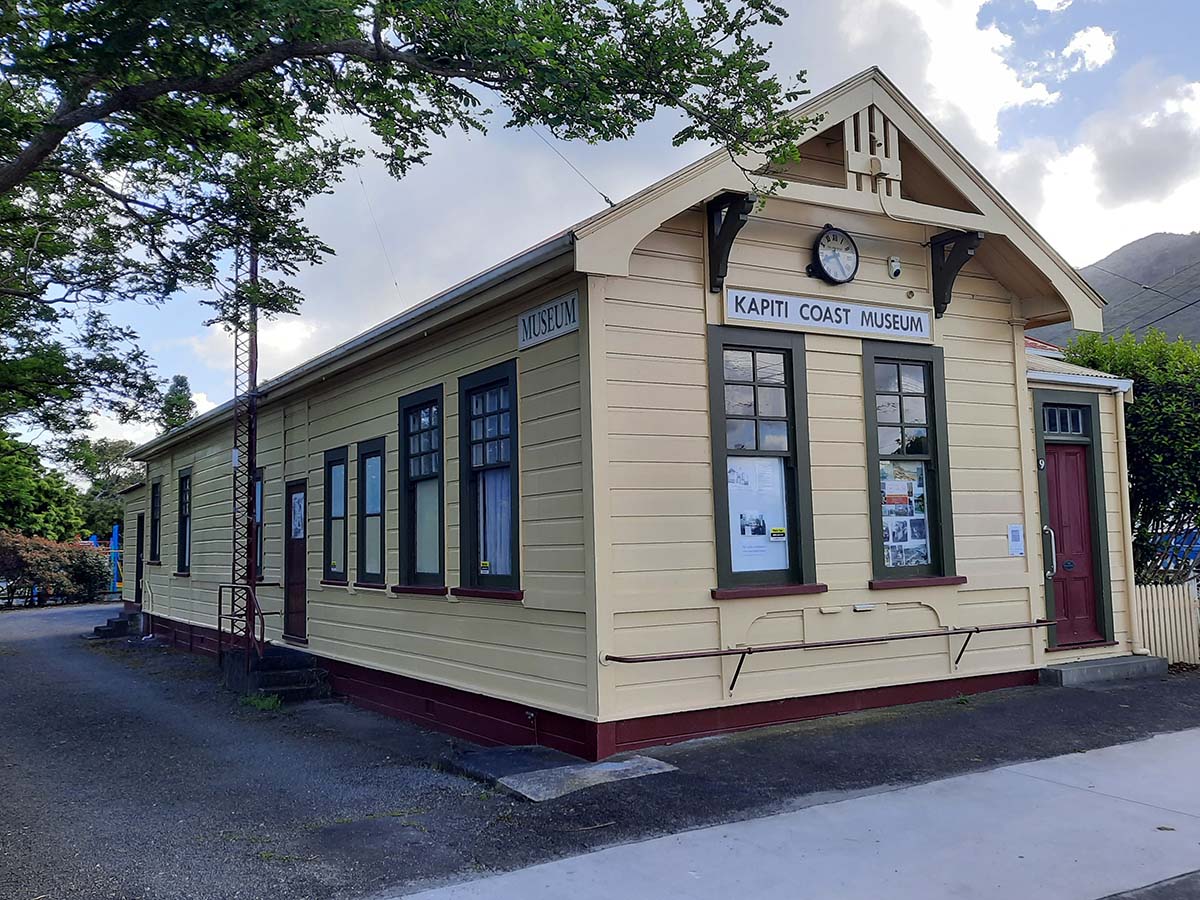
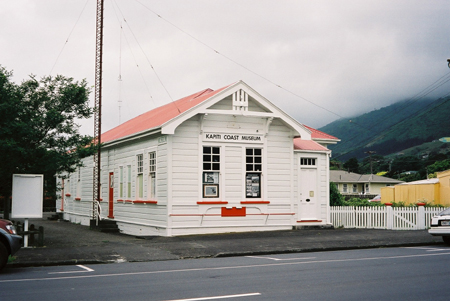
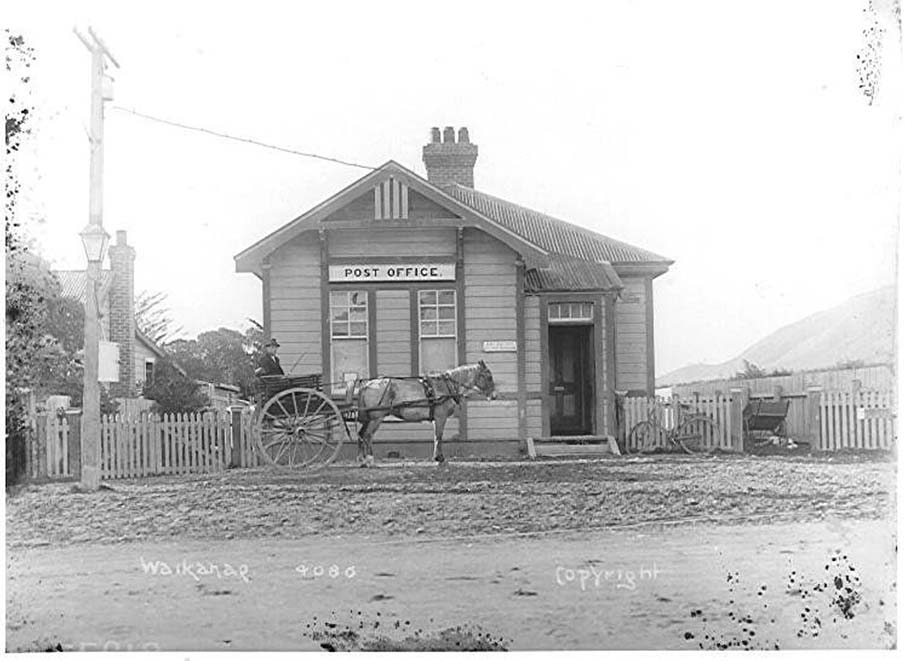
The Waikanae Post Office (Former) was designed by the office of well-known New Zealand government architect John Campbell (1857-1942). When it opened in 1908 it was described in the Evening Post as ‘a useful sort of building’. Typical of post offices at the time, the building was divided into two separate areas: the street-facing front half housed the post office with a private residence for the Postmaster at the rear which comprised of a kitchen, bathroom, two bedrooms and a parlour. Typical of a Campbell design, the exterior is rusticated weatherboards, the street-facing projecting gable has decorative timber elements and plain Queen Anne features are visible in the double hung windows and in the decorative bracing trim in the gable ends.
The Post Office was constructed by local builder, Mr Ernest Smith, at a cost of £700. It was opened by former Prime Minister Sir William Hall-Jones with due ceremony in February 1908. The building narrowly escaped a fire in Waikanae in 1931, although the windows were cracked and the building ‘well scorched’. In 1957 a new modern porch was built on the front elevation, then removed again to restore it to its original appearance in 1996. In 1960 the rear Postmaster’s quarters were absorbed into office use. The Post Office served the local Waikanae community until a new post office was opened in February 1982 in a more central location in Mahara Place. A local group of telecommunications enthusiasts took over the former Post Office for their collection of antiquated telecommunications equipment. In 1983 the owners of the building, the Horowhenua County Council, established a museum in the building called the Waikanae Museum. NZ Post and Telegraph donated to the collection the original Waikanae Telephone Exchange equipment. In 1993 the building reopened as the Kapiti Coast Museum Inc. whose purpose is to collect, preserve, display and curate items of importance to the local history of the Kāpiti Coast region.
Before 1822 Muaūpoko prospered in the area. They benefited from the abundant marine and inland natural resources available in the area, and the proximity to pounamu sources in Te Wai Pounamu / the South Island. Between 1822 and 1824 Ngāti Toa from Kāwhia, led by Te Rauparaha, moved south leaving behind the turbulent musket wars underway in the Waikato. They soon dominated the Kāpiti area, establishing a fortified base on Kāpiti Island. Between 1825 and 1828 Ngāti Raukawa and Te Ātiawa, also migrated to settle in the Kāpiti region. Following Pākehā settlement, Kāpiti became an important place for early contact between Māori and Pākehā in Aotearoa New Zealand. From 1833 until the mid-1840s whalers set up operations along the coast and on Kāpiti Island, processing the carcases of whales for oil and bone and frequently intermarrying with tangata whenua. As Pākehā settlement burgeoned in the area, the demand for a reliable post office service grew and Waikanae’s first post office building opened for business in 1865.
The Waikanae Post Office (Former) was designed by the office of well-known New Zealand government architect John Campbell (1857-1942). When it opened in 1908 it was described in the Evening Post as ‘a useful sort of building’. Typical of post offices at the time, the building was divided into two separate areas: the street-facing front half housed the post office with a private residence for the Postmaster at the rear which comprised of a kitchen, bathroom, two bedrooms and a parlour. Typical of a Campbell design, the exterior is rusticated weatherboards, the street-facing projecting gable has decorative timber elements and plain Queen Anne features are visible in the double hung windows and in the decorative bracing trim in the gable ends.
The Post Office was constructed by local builder, Mr Ernest Smith, at a cost of £700. It was opened by former Prime Minister Sir William Hall-Jones with due ceremony in February 1908. The building narrowly escaped a fire in Waikanae in 1931, although the windows were cracked and the building ‘well scorched’. In 1957 a new modern porch was built on the front elevation, then removed again to restore it to its original appearance in 1996. In 1960 the rear Postmaster’s quarters were absorbed into office use. The Post Office served the local Waikanae community until a new post office was opened in February 1982 in a more central location in Mahara Place. A local group of telecommunications enthusiasts took over the former Post Office for their collection of antiquated telecommunications equipment. In 1983 the owners of the building, the Horowhenua County Council, established a museum in the building called the Waikanae Museum. NZ Post and Telegraph donated to the collection the original Waikanae Telephone Exchange equipment. In 1993 the building reopened as the Kapiti Coast Museum Inc. whose purpose is to collect, preserve, display and curate items of importance to the local history of the Kāpiti Coast region.